The ranked tribute honors the ten finest Spurs managers of all time, evaluating them on trophies, playing style, and lasting influence. Each profile provides a concrete case for inclusion.
10 Greatest Managers of Tottenham Hotspur of All Time

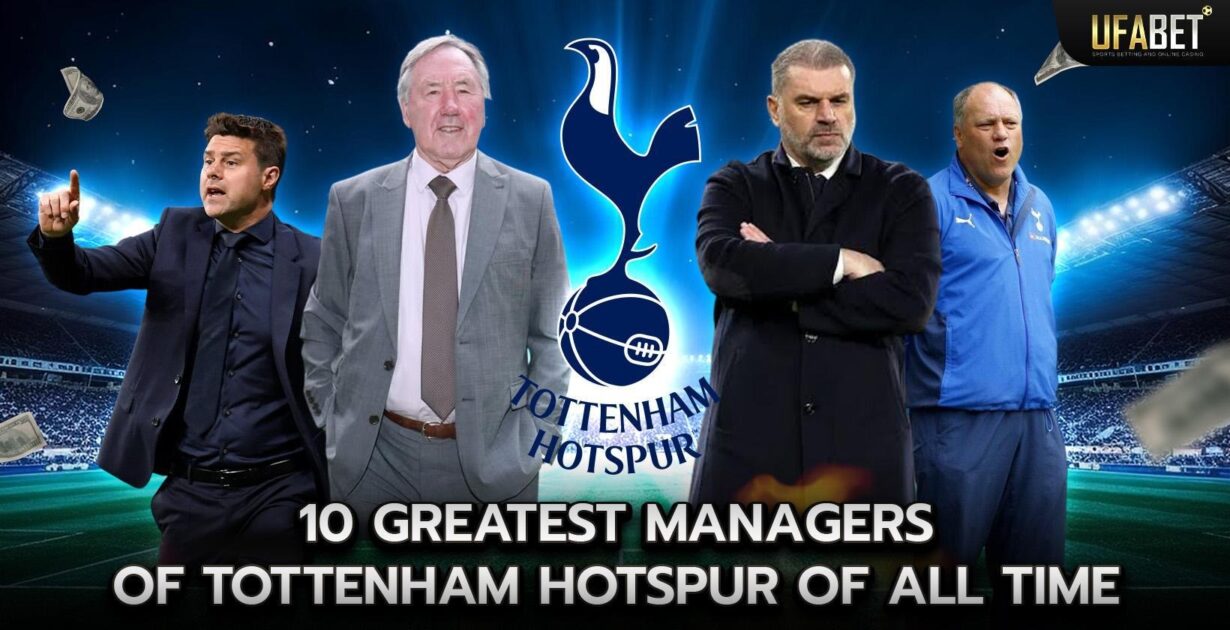
The managers are mainly the pillars that shape Tottenham Hotspur’s success across seasons. Managers transform tactical philosophies and club culture into practical values for fans, bettors, and the sport betting industry. The ranked tribute honors the ten finest Spurs managers of all time, evaluating them on trophies, playing style, and lasting influence. Each profile provides a concrete case for inclusion.
- Bill Nicholson: Won the 1961 double and eight major trophies.
- Keith Burkinshaw: Secured consecutive FA Cups and the 1984 UEFA Cup.
- Arthur Rowe: Pioneered the “push-and-run” style for the first top-flight title.
- Mauricio Pochettino: Led the modern club to a Champions League final.
- Terry Venables: Captured the 1991 FA Cup using flexible tactical systems.
- Peter McWilliam: Established the early passing identity and 1921 FA Cup.
- Harry Redknapp: Secured the first Champions League qualification with dynamic play.
- John Cameron: Led the club to the 1901 FA Cup as a non-league side.
- Ange Postecoglou: Revitalized the squad using an expansive, high-pressing attacking philosophy.
- Martin Jol: Restored the club as a consistent top-six Premier League competitor.
1. Bill Nicholson
Bill Nicholson managed the Tottenham Hotspur squad during the club’s most successful historical era from 1958 to 1974. Bill Nicholson’s management style blended rigorous squad discipline with an expansive passing philosophy that prioritized fluid attacking movement. He oversaw 832 matches over sixteen seasons, ranking as the most decorated leader in club history, and claimed eight major honors, including the historic 1960-61 double while helping Spurs win consecutive domestic and European trophies. His standout moments include becoming the first British manager to secure a major European trophy and orchestrating a 5-1 victory in the 1963 Cup Winners’ Cup final. Nicholson’s lasting legacy is defined by establishing the definitive identity of Tottenham football, representing the competitive peak of the club’s entire historical record.
2. Keith Burkinshaw
Keith Burkinshaw is a successful manager who directed the Tottenham Hotspur squad during the club’s prominent cup-winning era from 1976 to 1984, cementing his status as a club legend. Keith’s management style blended calm dressing room discipline with an attacking philosophy that prioritized technical proficiency across midfield lines. He coached 431 matches over eight seasons, ranking among the most decorated leaders in club history, and claimed three major honors, including consecutive domestic FA Cups,s while helping Spurs win the 1984 UEFA Cup title. Keith’s success includes securing the landmark signings of Argentine World Cup winners Osvaldo Ardiles and Ricardo Villa and orchestrating a penalty shootout victory in the 1984 UEFA Cup final. Burkinshaw’s lasting legacy is defined by restoring the club from second-division relegation to continental prominence, representing the competitive peak of Tottenham’s cup-winning history during the early 1980s.
3. Arthur Rowe
Arthur Rowe is an innovative manager who directed the Tottenham Hotspur squad during the club’s post-war championship era from 1949 to 1955. Rowe’s management style blended quick, short-passing combinations with intelligent off-the-ball movement that prioritized rapid transitions across attacking lines. He oversaw 278 matches over six seasons, ranking among the most influential leaders in club history, and claimed two major honors, including the 1950 Second Division championship while helping Spurs win their maiden First Division title in 1951. His standout moments in the dugout include orchestrating a landmark 7-0 victory over Newcastle United and securing consecutive league titles immediately following promotion. Rowe’s lasting legacy is defined by establishing the historic “push-and-run” blueprint that shaped the club’s modern identity, representing the competitive peak of Tottenham’s championship history during the early 1950s.
4. Mauricio Pochettino
Mauricio Pochettino is an impactful manager who directed the Tottenham Hotspur squad during the club’s modern Premier League era from 2014 to 2019. Mauricio Pochettino’s management style blended intense physical conditioning with a progressive philosophy that prioritized collective squad pressing across defensive lines. He oversaw 293 matches over five seasons, ranking among the most consistent leaders in club history, and claimed multiple top-three finishes, including a club-record 86-point campaign while helping Spurs reach the 2019 UEFA Champions League final. His standout moments in the dugout feature orchestrating a dramatic semi-final comeback victory over Ajax in Amsterdam and securing a landmark 3-1 win against Real Madrid at Wembley. Pochettino’s lasting legacy is defined by transforming the squad from domestic contenders to consistent continental competitors, representing the competitive peak of Tottenham’s modern Premier League history during the late 2010s.
5. Terry Venables
Terry Venables is an insightful manager who directed the Tottenham Hotspur squad during the club’s rebuilding era from 1987 to 1991. Terry Venables’ management style blended astute man-management with a progressive philosophy that prioritized technical midfield flair across attacking lines. He directed 164 matches over four seasons, ranking among the most shrewd leaders in club history, and claimed the 1991 FA Cup trophy while helping Spurs secure the FA Charity Shield. His standout moments in the dugout feature orchestrating a landmark 3-1 semi-final victory over Arsenal at Wembley and winning the 1991 FA Cup final against Nottingham Forest. Venables’s lasting legacy is defined by integrating elite talents like Paul Gascoigne into the lineup, representing the competitive peak of Tottenham’s cup-winning history during the early 1990s.
6. Peter McWilliam
Peter McWilliam is a foundational manager who directed the Tottenham Hotspur squad during the club’s formative era from 1912 to 1927 and 1938 to 1942. Peter McWilliam’s management style blended player development with a quick-passing philosophy that prioritized fluid ball movement across transition lines. He oversaw 502 matches over two spells, ranking among the longest-serving leaders in club history, and claimed the 1921 FA Cup trophy alongside the 1920 Second Division title while helping Spurs secure the 1921 FA Charity Shield. His standout moments were orchestrating the 1-0 victory over West Bromwich Albion in the 1921 FA Cup final and achieving a First Division runners-up finish in 1922. McWilliam’s lasting legacy is defined by mentoring future championship-winning managers like Arthur Rowe and Bill Nicholson, representing the competitive peak of Tottenham’s historical record during the 1920s.
7. Harry Redknapp
Harry Redknapp is a charismatic manager who directed the Tottenham Hotspur squad during the club’s modern renaissance era from 2008 to 2012. Harry Redknapp’s management style blended player empowerment with an expansive philosophy that prioritized fluid attacking flair across wide offensive lines. He oversaw 198 matches over four seasons, ranking among the most efficient leaders in club history, and claimed the 2010 Premier League Manager of the Season award while helping Spurs secure their maiden UEFA Champions League qualification. His success is proven by a thrilling 4-3 comeback match against Inter Milan and winning a crucial top-four decider against rival Manchester City at the Etihad Stadium. Redknapp’s lasting legacy is defined by elevating the club into a consistent top-four English competitor, representing the competitive peak of Tottenham’s modern Premier League history during the early 2010s.
8. John Cameron
John Cameron is an influential manager who directed the Tottenham Hotspur squad during the club’s historic early Southern League era from 1899 to 1907. John Cameron’s management style blended Scottish passing principles with a structured attacking philosophy that prioritized cohesive teamwork across forward offensive lines. He oversaw 570 matches over eight seasons, ranking among the longest-serving leaders in club history, and claimed the 1900 Southern League championship while helping Spurs win the historic 1901 FA Cup trophy. John succeeded in leading the team to a unique FA Cup triumph as a non-league team and scoring the crucial match equalizer during the 1901 final replay victory against Sheffield United. Cameron’s lasting legacy is defined by establishing the club’s initial national football profile, representing the definitive competitive peak of Tottenham’s foundational history during the turn of the twentieth century.
9. Ange Postecoglou
Ange Postecoglou is an attack-minded manager who directed the Tottenham Hotspur squad during the club’s modern cup-winning era from 2023 to 2025. Ange’s management style blended unwavering offensive belief with an expansive philosophy that prioritized inverted full-back movement across fluid attacking lines. Ange led the team to success across 90 matches over two seasons, ranking among the most definitive leaders in modern history, and claimed the 2024–25 UEFA Europa League trophy while helping Spurs secure a fifth-place Premier League finish during his debut campaign. His standout moments were becoming the first manager to win consecutive Manager of the Month awards initially and orchestrating a landmark 1-0 final victory against Manchester United in Bilbao. Postecoglou’s lasting legacy is defined by ending the club’s seventeen-year wait for major silverware, representing the competitive peak of Tottenham’s modern cup history during the mid-2020s.
10. Martin Jol
Martin Jol is a pragmatic manager who directed the Tottenham Hotspur squad during the club’s modern rebuilding era from 2004 to 2007. Martin’s management style blended strong squad unity with a direct philosophy that prioritized fast wing play across advanced offensive lines. He oversaw 148 matches over three full seasons, ranking among the most progressive leaders in modern club history, and claimed consecutive fifth-place Premier League finishes while helping Spurs secure consistent qualification for the continental UEFA Cup. He secured success for 148 matches over three full seasons, ranking among the most progressive leaders in modern club history, and claimed consecutive fifth-place Premier League finishes while helping Spurs secure consistent qualification for the continental UEFA Cup. His standout moments in the dugout include orchestrating a landmark 2-1 league victory over rivals Chelsea in November 2006 and guiding the team through a competitive campaign to reach the 2007 UEFA Cup quarter-finals. Jol’s lasting legacy is defined by breaking the club’s long-standing mid-table barrier, representing the competitive peak of Tottenham’s top-six resurgence history during the mid-2000s.
How Do Managers Impact Tottenham Hotspur?
Managers directly dictate Tottenham Hotspur’s competitive trajectory, playing identity, and long-term historical success by controlling several distinct strategic operational dimensions within the club. Arthur Rowe modified team formations by introducing the “push-and-run” short-passing blueprint, while Ange Postecoglou later implemented inverted full-backs to secure the 2024-25 UEFA Europa League title. Keith Burkinshaw drastically altered the roster by signing Argentine World Cup winners Osvaldo Ardiles and Ricardo Villa, transitioning the club into a prominent cup-winning era. Mauricio Pochettino enforced rigorous physical conditioning standards that united his modern squad and yielded a landmark 2019 UEFA Champions League final appearance. Bill Nicholson coordinated distinct tactical systems and strict player discipline to successfully secure the historic 1960-61 First Division League and FA Cup double. These integrated managerial interventions consistently define the true competitive standard of Tottenham football performance.
Tips for Using Manager Tactics When Betting on Tottenham Hotspur?
Analyzing the tactical setups and operational tendencies of the Tottenham Hotspur manager can provide valuable insights for football bettors looking to identify hidden value across multiple betting markets. Whether you’re evaluating match outcomes, goal totals, Asian handicaps, or player performance bets, understanding the manager’s tactical approach can improve decision-making. For those following the action through the UFABET football betting market, these insights can help uncover opportunities that may be overlooked by the broader market.
- Formation and Style: Assessing the manager’s preferred tactical blueprint helps determine appropriate angles for over/under goals totals and Asian handicap selections.
- Opponent Adaptability: Tracking how the manager alters tactical setups against elite versus lower-tier opposition reveals whether to back clean sheets or high-scoring outcomes.
- Rotation Tendencies: Factoring in the manager’s historical patterns for squad rotation prevents betting on regular starters during congested cup schedules.
- Managerial Change Bounce: Monitoring the team’s immediate response in the first fixture following a mid-season managerial replacement can yield profitable short-term results.
- In-Game Substitutions: Observing the manager’s second-half adjustment patterns provides a strategic edge when engaging with live, in-play betting markets.
How to Analyze Tottenham Hotspur Manager Tactics?
Evaluating the tactical framework of a Tottenham Hotspur manager requires a systematic review of structural indicators and statistical match data. Breaking down these core operational elements provides sports analysts with a clear, objective understanding of the team’s overarching strategic direction.
- Line-ups and Formations: Studying recent starting line-ups and primary pitch formations establishes the manager’s baseline system and preferred player combinations.
- Pressing and Build-up: Watching structural pressing triggers and deep build-up phases reveals how the team advances the ball and defends open-field transitions.
- Venue Comparison: Comparing home versus away tactical setups highlights how the manager systematically modifies defensive risk based entirely on match location.
- Head-to-Head Adjustments: Checking past head-to-head tactical adjustments against specific opposing managers demonstrates the individual’s willingness to deviate from their standard approach.
- Statistical Verification: Using advanced metrics like expected goals, possession percentages, and total shot volumes verifies visual observations with objective performance data.
Do Manager Personality and Experience Affect Tottenham Hotspur Team Trends?
Yes, a manager’s personality and experience clearly affect Tottenham Hotspur’s team trends. For example, the attack-minded football philosophy of Ange Postecoglou produces distinct high-scoring and high-risk team trends, which contrast sharply with the structured, pragmatic approach implemented by Keith Burkinshaw during his historical cup-winning era. Experienced leaders possess extensive high-level competitive experience. For example, Harry Redknapp maintains overall squad stability and executes precise tactical adjustments during high-stakes top-four races, whereas less experienced coaches often exhibit performance volatility during congested fixture schedules. Manager personality and experience remain critical to recognize that these integrated psychological and professional traits establish a highly predictable performance tendency rather than providing an absolute statistical guarantee during any single match outcome on the football pitch.
All views and opinions expressed in this article are the views and opinions of the writer and do not necessarily represent the views of The Fighting Cock. We offer a platform for fans to commit their views to text and voice their thoughts. Football is a passionate game and as long as the views stay within the parameters of what is acceptable, we encourage people to write, get involved and share their thoughts on the mighty Tottenham Hotspur.
Would you like to write for The Fighting Cock?