Kit sponsorship trends in football can reveal some interesting insights into certain aspects of the economy- and society at large. As the Premier League has grown in stature, prestige, and popularity over the years, these effects have become magnified. Many online gambling companies are involved in sponsorship deals and this has caused some consternation (both […]
Why the number of football teams sponsored by gambling companies is on the rise
Kit sponsorship trends in football can reveal some interesting insights into certain aspects of the economy- and society at large. As the Premier League has grown in stature, prestige, and popularity over the years, these effects have become magnified.
Many online gambling companies are involved in sponsorship deals and this has caused some consternation (both justified, as well as misplaced) among anti-gambling campaigners.
What the numbers say about gambling kit sponsorships in England
When the First Division was revamped into the Premier League back in 1992, things were drastically different. In the area of kit sponsorships, the number of gambling logos was zero.
This trend continued well into the new millennium. Gambling, especially online gambling, got a huge shot in the arm in the early 2000s with legalization and liberalization. Since then, the presence of gambling companies on Premier League and Championship jerseys has steadily risen.
In 2009, the number in the Premier League stood at four. Incidentally, it was Spurs who kicked off this trend with the Mansion Casino group in 2006-07. That deal was the third biggest of its kind in the league that year. It did rile up Spurs fans early on because it was the first time the glorious white kits were sullied with shades of red.
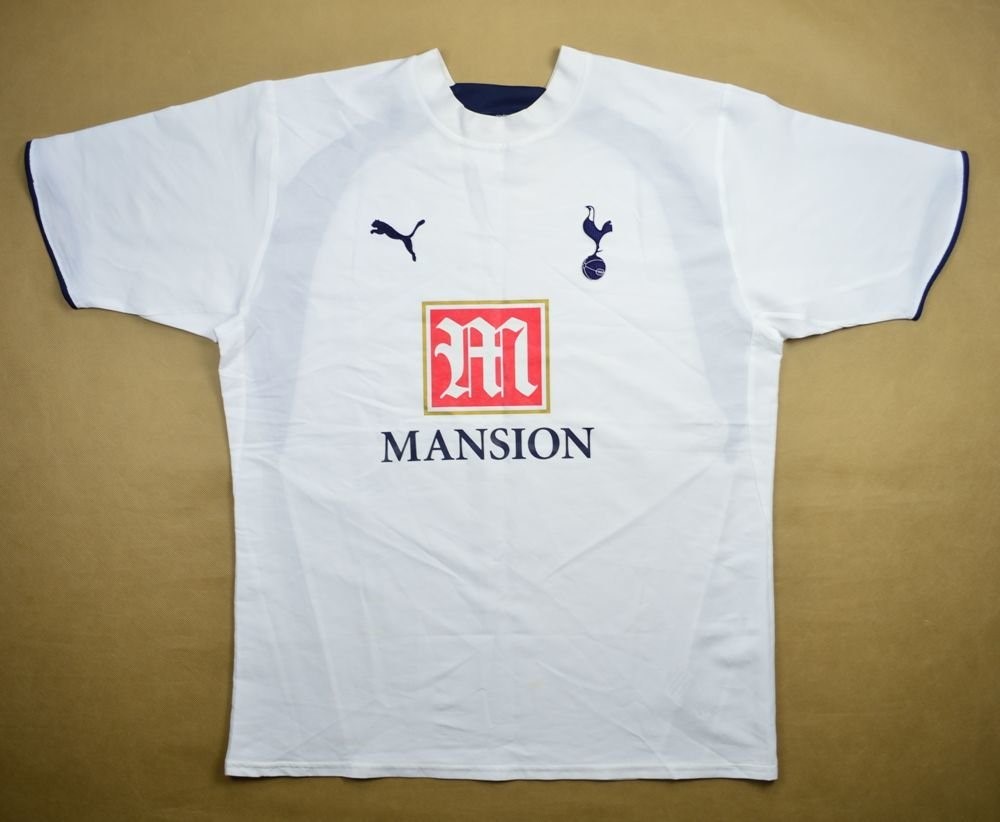
This is how it started
Now the numbers are quite startling. In 2018-19, nine out of twenty EPL clubs had a gambling firm as their main kit sponsor. These include our London neighbors like Crystal Palace, Fulham, and Westham. Other names in the list are Everton, Newcastle United, Wolves, Huddersfield, Bournemouth, and Burnley.
Things look even starker down in the Championship, with 17 out of the 24 clubs being sponsored by an online or offline betting brand. All told, the percentage of clubs sponsored by bookmakers in the English top flight currently stands at a whopping 60%.
How England compares to other leagues across the Channel
What makes the situation in England so unique is the disparity when compared to other big leagues in Europe. The closest in terms of the number of kit sponsors are the Spanish, with La Liga having around five sponsors among the smaller teams. The lone big fish there is Sevilla.
In the other big leagues, gambling logos are largely absent from the club kits. Italian clubs like Roma and Lazio have deals with bookmakers for their training kits. But the Italian government has thrown cold water on those deals with a recent law banning all gambling ads across media.
In Germany and France, teams do partner with betting firms, but abstain from inking shirt sponsorship deals for some reason.
Have other sectors dominated kit sponsorships in the past?
The recent domination of English football by gambling sponsors may be unprecedented in its scale, but it is by no means unusual to see certain sectors dominate sponsorships. And funnily enough, Spurs have been in the thick of these trends, since the beginning of the Premier League.
In the early 1990s, alcohol companies dominated with four or five teams sporting their logos and names. Spurs had a 12-year association with Holsten Beer during this time.
By the latter half of the 1990s, consumer electronic brands and software companies became more prominent, accounting for half the teams in the league. You may remember the Tottenham kits carrying the HP logo and branding from the late ‘90s.
In the early 2000s, the mantle fell to finance services, but with the recession of 2008, those soon fell away. Since then, we have slowly seen the rise of gambling brands. Spurs may have done away with the Mansion deal in 2010, but the rest of the league seems to have more than picked up the slack in recent years!
What does this tell us about gambling and the UK?
There is no doubt that gambling in the UK is becoming increasingly popular these days. All the industry figures indicate strong growth in recent years, and it shows no signs of flagging any time soon.
In 2018, the industry as a whole was worth over 14 billion pounds, up from 8.4 billion in 2011. Surveys indicate that at least a third of the population gamble on a weekly basis, making the UK one of the biggest markets in the world. And since 2014, a lot of this growth has come from online gambling, thanks to liberalized rules.
It is not just the brute numbers that have resulted in this growing alliance between football and gambling sponsorships. There is a natural synergy between the two. For starters, kit sponsorships are an incredibly effective way to reach a massive audience. In the case of gambling firms, this also happens to be the right kind of audience. We are talking about young, predominantly male, attracted to sports and with a natural predisposition to sports betting and other forms of gambling.
You can’t blame the companies from latching themselves on to any football club willing to wear their names! Even overseas gambling brands are attracted to Premier League sponsorship deals. This is not surprising, given the size and reach of the Premier League, especially in Far Eastern markets. Newcastle’s Fun88 is actually based in China.
Are gambling brands here to stay?
This is a very dicey question, given the current state of affairs at the legislative level in the UK. Over the last couple of years, the government has tightened laws related to gambling in a bid to beef up protection of players and children.
Even the RGA, gambling industry association has backed down somewhat, voluntarily withdrawing ads from live sports events. But critics and the Labour party are asking for more, including full withdrawal from football kit sponsorships.
It is frankly too early to predict if the government will push for that kind of legislation in the future. But we might have seen the zenith of gambling sponsorship in English football. Even if that is true, gambling is far too big a success story in Britain. It will continue to grow and adapt to the changing regulations.
All views and opinions expressed in this article are the views and opinions of the writer and do not necessarily represent the views of The Fighting Cock. We offer a platform for fans to commit their views to text and voice their thoughts. Football is a passionate game and as long as the views stay within the parameters of what is acceptable, we encourage people to write, get involved and share their thoughts on the mighty Tottenham Hotspur.
Would you like to write for The Fighting Cock?